
Navigating a Slow Market
Over two years have passed since the Federal Reserve initiated its first interest rate hike, and it has been more than a year since rates have remained unchanged, at their highest level in 23 years.1 Now, the market is anticipating the advent of rate cuts, but the expectation is of fewer in number and slower in pace than widely believed at the start of the year.2 Although the timing and impact of such rate cuts remain unpredictable, this shift toward expecting rate cuts and the end of rate hikes has partially helped alleviate a nearly two-year-long market downturn.
.jpg)
From our vantage
point, the commercial
real estate (“CRE”)
market continues
normalizing and
adjusting to its new
reality. It’s not as if
interest rates are
excessively high from a
multi-decade
perspective; they’re
just excessively high
relative to twenty-four
months ago1 -
adaptation to such a
rapid
rate of change typically
takes time.
The word “scarcity” comes to mind when we consider today’s deal flow - transaction volume is down 60% since the initial rate hike in March 2022.3 However, the relative trickle of deals we do see is becoming more interesting to us, which leads us to believe we are in the middle of a market trough. Despite a marginally improved outlook for interest rates, we expect transaction volume to remain subdued in the short term. Consequently, we anticipate that deal volume on the Sammamish Realtor Marketplace will also remain relatively low in H2 2024 compared to our historical volume.
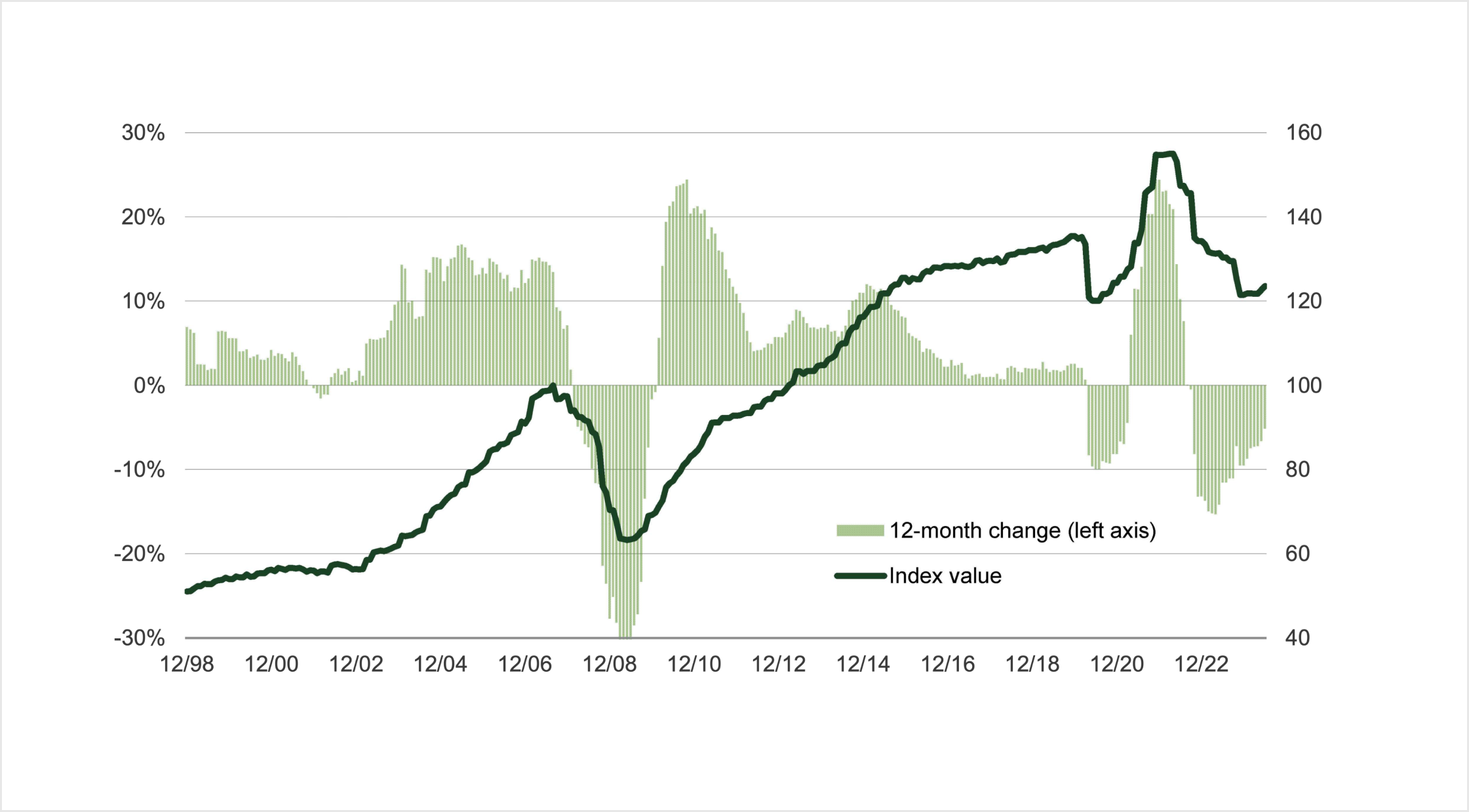
Overall, we are looking for opportunities to acquire properties adequately discounted from their peak values, preferably in locations where long-term market fundamentals remain intact, with an outlook that supports positive net absorption and strong population growth over the next five years, especially those with recovering urban centers. Some of these markets may be oversupplied in the short term. That may be acceptable, provided the pricing reflects the current environment. As for ground-up development, while not impossible, we observe it’s harder to scout these projects today due to a combination of generally expensive debt, scarcity of lenders willing to lend, expanding cap rate environment, and tepid overall rent growth.4
To keep you updated, we will closely monitor interest rates, inflation, and other economic indicators as economic trends evolve. Our H2 2024 report incorporates our industry knowledge and thorough research to construct our outlook and strategies across various CRE asset classes.
-1.jpg)


